Electric vehicles have provided the opportunity for US taxpayers to reduce the price of acquiring a qualified car through tax credits offered by the government. In some cases, such incentives can amount to thousands of dollars.
Nevertheless, the terms of the federal EV tax credits were updated in 2025. As a result, the New Clean Vehicle Credit, Previously-Owned Clean Vehicle Credit, and Qualified Commercial Clean Vehicle Credit ended earlier than expected.
This is why the electric vehicle tax credit in 2026 differs from those described in older articles. Those who want to purchase an EV in 2026 will not be able to use the expired federal credits. If you already got a qualified vehicle, there might be other actions to take with regard to claiming the credit on your tax return.
Let us see what you should consider when it comes to the expiration date, earlier eligibility requirements, tax forms, and filing requirements.
Key Takeaways
- Federal EV tax credits expired for vehicles acquired after September 30, 2025. New and used electric vehicles purchased in 2026 do not qualify for these expired credits.
- If you acquired an eligible EV by September 30, 2025, you may still qualify, even if you took possession of the vehicle later.
- The former federal credit offered up to $7,500 for qualifying new clean vehicles and up to $4,000 for qualifying used clean vehicles.
- Eligible taxpayers generally report credits for vehicles placed in service during 2025 on their 2025 federal tax returns filed in 2026.
- Form 8936 and Schedule A (Form 8936) help taxpayers calculate and report applicable clean vehicle credits.
- Receiving an EV credit at the dealership does not remove your responsibility to report it on your tax return.
Are Electric Vehicle Tax Credits Available in 2026?
No. The federal tax credits for new, used, and qualified commercial clean vehicles are unavailable for vehicles acquired after September 30, 2025.
The change followed the passage of the One Big Beautiful Bill Act in July 2025. Before the law changed, eligible taxpayers could claim federal credits when purchasing qualifying electric vehicles, plug-in hybrids, and certain fuel cell vehicles.
The former credit programs had different limits and eligibility requirements.
| Former federal credit | Maximum credit | Acquisition deadline |
| New Clean Vehicle Credit | $7,500 | September 30, 2025 |
| Previously-Owned Clean Vehicle Credit | $4,000 | September 30, 2025 |
| Qualified Commercial Clean Vehicle Credit | $40,000 | September 30, 2025 |
These are the former maximum amounts, not benefits available for vehicles acquired in 2026.
The expiration does not automatically end every EV incentive in the country. State governments, local authorities, and utility companies may have separate programs with their own eligibility rules. However, those programs do not restore the expired federal credits.
For the official announcement and current rules, visit the IRS Clean Vehicle Tax Credits page.
Who Can Still Claim an EV Tax Credit in 2026?
Some taxpayers may still qualify for a federal EV tax credit when filing their 2025 tax returns in 2026. The key is whether they acquired an eligible vehicle by the September 30, 2025, deadline and meet the remaining requirements.
The IRS considers a vehicle acquired when the buyer enters into a binding written contract and makes a payment. A payment may include a small down payment or a vehicle trade-in.
This distinction matters when a buyer signed a contract before the deadline but received the vehicle later.
For example, suppose you signed a binding purchase agreement and made a qualifying payment on September 25, 2025. You took possession of the vehicle in October 2025. You may still qualify if the vehicle meets the applicable requirements and you satisfy the other eligibility conditions.
On the other hand, placing an order or paying a reservation fee does not automatically establish that you acquired the vehicle before the deadline. To determine whether you qualify, check these details:
- Purchase agreement: Did you enter into a binding written contract by September 30, 2025?
- Payment record: Did you make a qualifying payment by that date?
- Delivery date: When did you take possession of the vehicle?
- Vehicle eligibility: Did the vehicle meet the applicable requirements?
- Seller documentation: Did the dealer submit the required time-of-sale report to the IRS?
- Taxpayer eligibility: Did you meet the applicable income, ownership, and use requirements?
The acquisition date establishes whether you meet the deadline. The date you take possession determines when the vehicle is placed in service, which generally determines the tax year for claiming the credit.
The IRS guidance on clean vehicle credit changes explains how these dates affect eligibility.
What Were the Federal EV Tax Credit Rules?
Understanding the former credit requirements can help you determine whether a vehicle acquired before the deadline qualifies. The rules differed for new vehicles, used vehicles, and vehicles used for business.
1. New Clean Vehicle Credit
Under Internal Revenue Code Section 30D, eligible buyers could receive a federal tax credit of up to $7,500 for a qualifying new electric vehicle, plug-in hybrid, or fuel cell vehicle.
The amount depended on the vehicle’s battery components, critical mineral requirements, and other conditions. Not every eligible vehicle qualified for the full $7,500.
The former income limits were based on modified adjusted gross income (MAGI).
| Tax filing status | Maximum MAGI |
| Single | $150,000 |
| Married filing jointly | $300,000 |
| Head of household | $225,000 |
Eligible buyers could generally use their MAGI from the year of purchase or the preceding year, subject to the applicable rules.
Vehicles also had to meet requirements involving final assembly, battery capacity, MSRP, and other technical and manufacturing conditions. The former MSRP limits were $55,000 for cars and $80,000 for qualifying vans, SUVs, and pickup trucks.
Meeting the income and price limits alone did not guarantee eligibility. The specific vehicle also had to qualify.
For details, see the IRS New Clean Vehicle Credit guidance.
2. Previously-Owned Clean Vehicle Credit
The Previously-Owned Clean Vehicle Credit, under Section 25E, previously offered eligible buyers a credit of 30% of a qualifying used vehicle’s sale price, up to $4,000.
The former income limits were lower than those for new vehicles.
| Tax filing status | Maximum MAGI |
| Single | $75,000 |
| Married filing jointly | $150,000 |
| Head of household | $112,500 |
The vehicle generally had to be purchased from a licensed dealer for $25,000 or less. It also had to be at least two model years older than the calendar year of purchase and meet other requirements.
Additional restrictions applied to prior ownership, previous credit claims, and the buyer’s eligibility. For instance, the buyer generally could not have claimed another previously-owned clean vehicle credit during the three years before the purchase.
These rules matter when reviewing a used EV acquired before the federal deadline. A used vehicle purchased in 2026 cannot qualify for the expired federal credit.
Read the IRS Used Clean Vehicle Credit guidance for the former program’s requirements.
3. Qualified Commercial Clean Vehicle Credit
Businesses and certain tax-exempt organizations previously could claim the Qualified Commercial Clean Vehicle Credit under Section 45W.
The former credit could reach $7,500 for qualifying lighter vehicles and up to $40,000 for qualifying heavier vehicles. The actual amount depended on the vehicle’s weight, eligible costs, and other requirements.
Unlike the personal-use credits, this program applied to qualifying commercial vehicles. The rules also differed depending on whether the vehicle was used for business or leased to others.
Businesses reviewing an earlier purchase should retain the purchase contract, payment records, vehicle identification number (VIN), delivery records, and documentation of business use.
The IRS Commercial Clean Vehicle Credit page provides further details.
How to Claim an Eligible EV Tax Credit on Your 2025 Tax Return
If you acquired an eligible vehicle by the deadline and took possession of it during 2025, you generally claim the credit on your 2025 federal income tax return filed in 2026. The process is straightforward when you have the required documents.
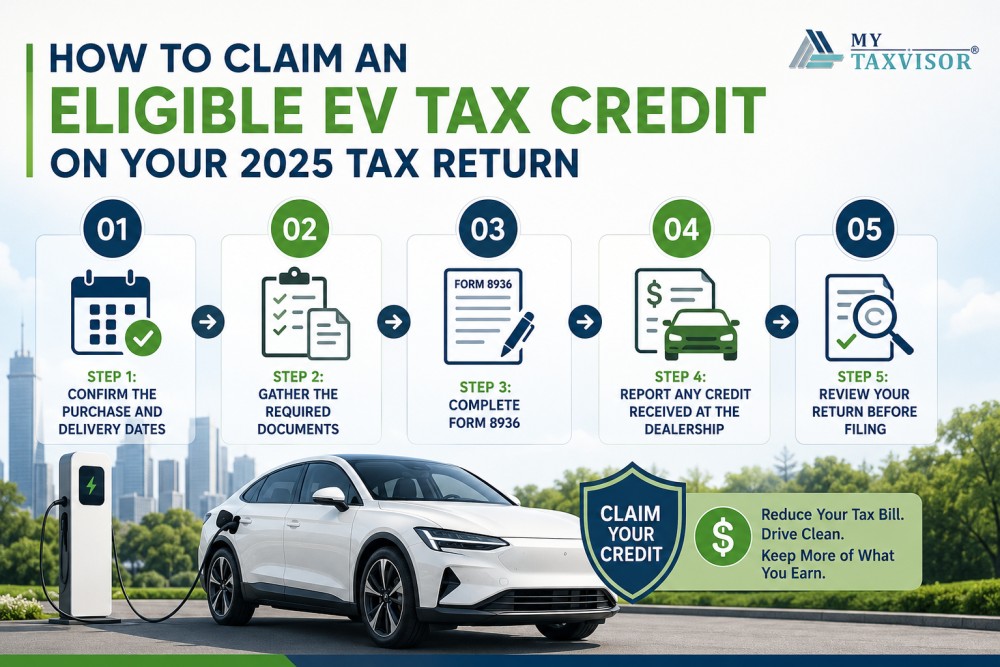
Step 1: Confirm the Purchase and Delivery Dates
Review your signed purchase agreement and payment records to confirm that you acquired the vehicle by September 30, 2025.
Next, check when you took possession. If delivery occurred after the deadline, make sure the earlier acquisition meets the IRS requirements.
Step 2: Gather the Required Documents
Keep the following records ready:
- Signed purchase agreement and payment receipt.
- Vehicle identification number (VIN).
- Seller’s accepted time-of-sale report.
- Vehicle delivery or possession date.
- Purchase price and relevant vehicle details.
- Income information needed to verify eligibility.
For eligible new and used vehicles, the dealer must submit the required report to the IRS and provide the buyer with the relevant information. If you cannot find your copy, contact the dealer before filing.
Step 3: Complete Form 8936
Form 8936, Clean Vehicle Credits, is used to calculate and report applicable clean vehicle credits. Schedule A (Form 8936) records the vehicle details and calculates the credit amount for each qualifying vehicle.
Use the forms and instructions for the tax year in which the vehicle was placed in service. For a vehicle placed in service during 2025, use the 2025 forms and instructions.
Step 4: Report Any Credit Received at the Dealership
Some eligible buyers transferred their credit to a registered dealer at the time of purchase. The dealer provided the financial benefit upfront, reducing the amount the buyer had to pay.
If you received this benefit, you must still file Form 8936 and the relevant Schedule A with your tax return.
The return must reconcile the amount transferred with your actual eligibility. If you received a credit but did not meet the applicable requirements, you may have to repay some or all of the amount under the relevant rules.
Step 5: Review Your Return Before Filing
Check the VIN, purchase agreement, delivery date, seller report, and credit amount. Confirm that the credit is reported for the correct tax year and that any upfront payment is properly reconciled.
For the official forms and instructions, visit the IRS Form 8936 page.
What If You Received an EV Tax Credit but No Longer Qualify?
Receiving a credit at the dealership does not guarantee that you meet every tax requirement. Your final eligibility depends on the applicable rules and the information reported on your tax return.
If you received an upfront credit for a vehicle acquired before the deadline, check your income eligibility, vehicle details, and seller documentation before filing.
If the credit was transferred to the dealer but you do not qualify, repayment may be required. The treatment depends on the applicable credit rules and your circumstances.
Do not leave the credit off your return simply because the dealer handled the transaction. Review the relevant Form 8936 instructions or seek professional tax assistance if the purchase details are unclear.
Can You Still Get Other EV Incentives in 2026?
Although the federal clean vehicle credits have expired, other incentives may still be available depending on where you live.
State programs, utility companies, and local authorities may offer EV rebates, charging incentives, or other benefits. Their availability, funding, and eligibility requirements vary.
Before buying a vehicle, check the official website of your state government or utility provider. Confirm that the program is active, that funds remain available, and that the vehicle meets its requirements.
Keep in mind that a state rebate and a federal income tax credit are different benefits. You should not assume that a local incentive follows the same rules as the former federal programs.
For a broader understanding of how tax benefits work, you can also read our guide to Federal Income Tax Credits, which explains how eligible credits may affect your federal tax return.
Final Thoughts
The federal EV tax credit rules changed significantly in 2025, so taxpayers need to distinguish between credits that have expired and claims that may still be valid.
If you buy an electric vehicle in 2026, you cannot claim the former federal new, used, or commercial clean vehicle credit for that purchase. However, if you acquired an eligible vehicle by September 30, 2025, you may still qualify when filing your tax return.
Check your purchase and delivery dates, keep the seller’s documentation, and use the correct tax-year forms. If you received a credit upfront or are unsure whether your purchase meets the deadline, review your eligibility before filing.
Need Help With Your Federal Tax Return?
MyTaxVisor helps taxpayers understand federal tax rules, review applicable credits, and prepare their returns with greater confidence. Get professional guidance on your filing requirements and make sure your tax return reflects the rules that apply to your situation.
Frequently Asked Questions
1. Does the EV tax credit apply to a vehicle purchased through a private seller?
The old credit requirement was such that the car should have been bought from a registered dealer. Buying the used car privately would have made the owner ineligible for the previously owned clean vehicle credit.
2. Can I claim an EV tax credit if I lease a vehicle?
The lessee could not claim a personal new or used clean vehicle credit with regard to the leased vehicle. According to the previous rules for the commercial clean vehicle, the lessor could potentially claim the credit, provided he/she met all the necessary requirements. Lease payment or reduced monthly payment did not qualify the lessee to receive the tax credit.
3. What happens if my dealer submitted incorrect information to the IRS?
Contact the dealer and request that they check the time-of-sale report. It should be accurate, and there might be some correction that needs to be made via the reporting system of the IRS. Take photocopies of your updated report along with the documentation of your purchase.
4. Can I claim a federal EV credit for a car bought in 2024 but file for it in 2026?
Possibly, but the answer depends on whether you have already claimed the credit and whether you are still within the appropriate deadline. If you have forgotten a credit on a previous tax form, read the IRS guidelines for amending your tax form for that year. The 2026 filing date will not make the otherwise ineligible car eligible.
5. Where can I check whether my specific EV qualified for the former credit?
The first step is to refer to the IRS guidelines on the relevant tax credit and year. The VIN number, the information on the manufacturer, the purchase documents, and the seller report should be referred to. IRS guidelines on new and used clean vehicles contain the former information and documentation.
Disclaimer: This article is for informational purposes only and does not constitute tax advice. Please verify the latest IRS guidelines or consult a qualified tax professional for advice specific to your situation.